 Reputation Management
Property Management Keywords: Leveraging SEO
 Stephen Fox
You have probably heard of SEO.
Moz.com defines SEO as “the practice of increasing the quantity and quality of traffic to your website through organic search engine results”
While this definition is useful, it doesn’t answer questions about how to put SEO into practice with your property management website.
And that is exactly what we are going to lay out for you in this article.
We are going to show you how you can use SEO to drive more traffic to your website, resulting in more leads, and ultimately more business.
Why SEO?
Millions of people use search engines every day.
Search engines are the primary tool consumers use when searching for a service.
Landlords and rental property owners aren’t pulling out the yellow pages when they are looking for a property manager. They are using search engines to research the best property management companies in the area.
And being the best means being on the first page of Google.

So how do you achieve this? How does Google determine what pages are the most relevant? How do you get on the first page of Google?
Google favors pages that contain relevant and high-quality information that relates to the searcher’s query.
Google determines relevance by crawling the content of a website and evaluating whether or not the content is relevant to the searcher’s query, based upon the keywords the website contains.
Discover Your Property Management Keywords
At this point, you know what SEO is, and you know why it is valuable to you as a property manager. You understand that good SEO results in more leads for you.
You know that you need to use specific keywords in order for you to rank well on Google and for landlords to discover your services.
What you are probably wondering, is exactly what keywords you should be using.
You need to consider what keywords rental property owners are searching for when they are looking for a property manager. You then need to develop the content of your website around these words.
Every page on your website should use the words that landlords use when they are searching for a property management company online.
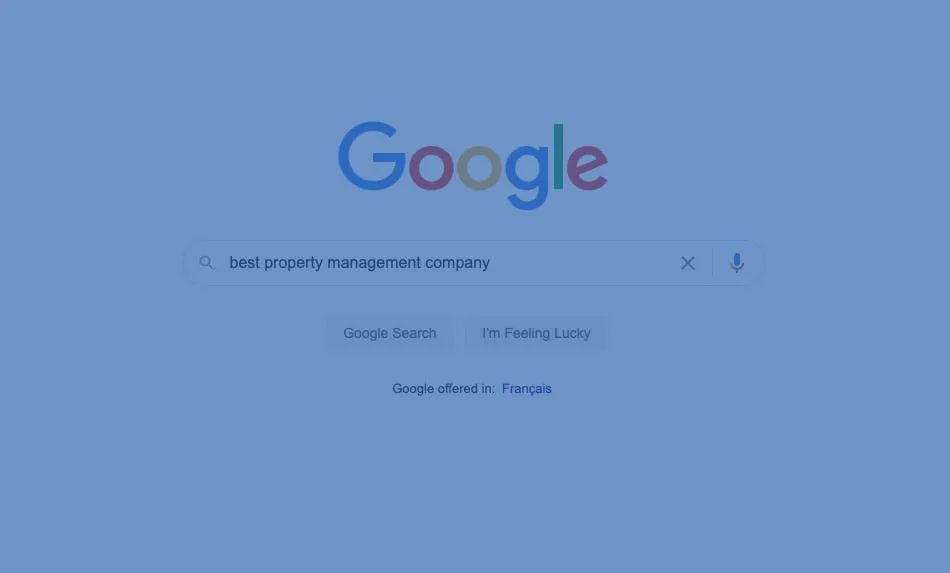
We’ve compiled a list of popular property management keywords to get you started:
Property management
Property management
Rental property management
Rental property management
Property management services
Property management services
Rental property management company
Rental property management company
Real estate property management
Real estate property management
Apartment management company
Apartment management company
residential property management
Residential property management
Apartment management
Apartment management
Real estate management company
Real estate management company
Rental management companies
Rental management companies
Residential property management
Residential property management
Property rental companies
Property rental companies
Best property management companies
Best property management companies
Property management companies
Property management companies
Building management company
Building management company
Professional property management
Professional property management
Real estate management
Real estate management
Management properties
Management properties
Top property management companies
Top property management companies
Property rental management
Property rental management
Apartment property management
Apartment property management
Property management near me
Property management near me
Home rental companies
Home rental companies
The keywords listed above all have high search volumes. That means that lots of people searching for property management services are searching these terms on Google every single day.
Want Help Growing Your Property Management Company?
FIND OUT MOREUse Local Property Management Keywords
As a property manager, it is essential that you use local keywords.
The keywords listed above have high search volume, but you should also use keywords specifically targeting the areas your property management company serves.
By using local keywords, you will show search engines that your website is relevant to a specific area. In other words, you will be able to show search engines exactly what areas you serve by using keywords for that area. If done correctly, your website will appear high in search results when someone searches for a property management company in the area.
Let’s use an example.
Say you are a property manager located in Plano, TX.
You may have a higher chance of showing up in search results if you optimize your page for Plano TX specifically.
It is important to remember that a landlord looking for a property manager might be making a location-specific search.
A landlord might search just “property management’.
But there is also a chance that they will be making a location-specific query, such as “Property Management Plano TX.”
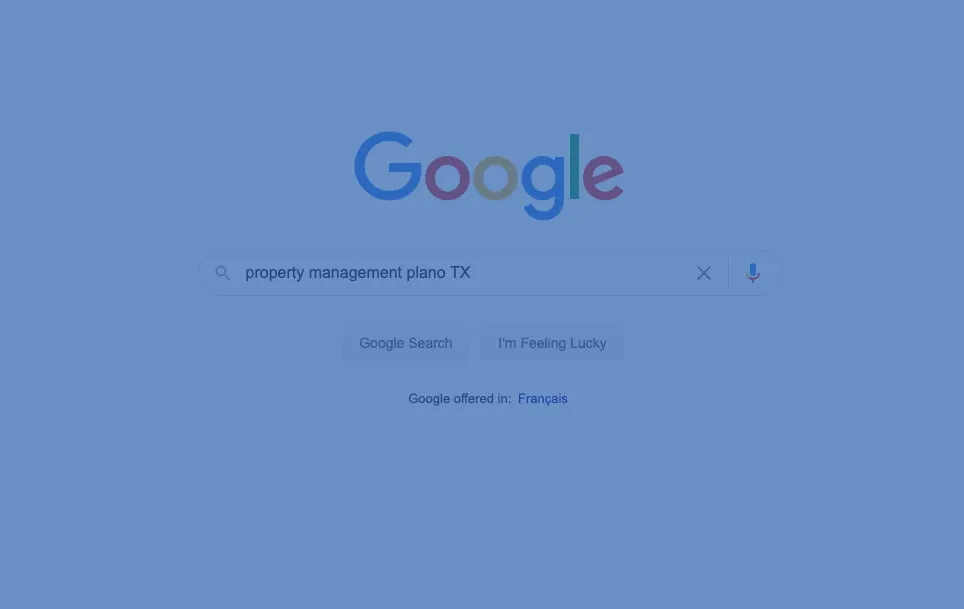
For this reason, you should be using keywords for each of the areas you serve.
A property manager in Plano, TX will likely also manage properties in Dallas/Fort Worth, Arlington, Richardson and more.
It is essential that you use keywords for each area you serve.
This gives you the highest chance of ranking high in search results for each area.
Where Keywords Should Go
We have a few tips and tricks when it comes to placing keywords on a page.
You need to keep in mind that certain areas hold more power than others.

For this reason, you want to make sure you include your keywords in the places on your website that have the most power, and that Google is looking at when it crawls a website.
URL
H1 Header
Image Alt-Texts
Page Title and Meta Description
Don’t Over Optimize Your Keywords
Each page on your website should be optimized for a specific keyword. If you use the same keyword on multiple pages then you run the risk of keyword cannibalization. “Keyword cannibalization happens when several pages on your website compete for the same keyword or phrase in Google” Source
When you have multiple pages on your website that target the same keyword, you end up competing with yourself.
Let’s go back to our example of a property manager in Plano, TX.
If you are a property manager in Plano, TX, then you might think it is a good idea to use the keyword “Plano property management” on all of your pages. After all, it is what you are trying to rank for.
But if you use the same keyword over and over, you aren’t showing Google which page on your website you want to rank for that keyword. This confuses Google, which will hurt your keyword rankings.
For this reason, you must be careful not to optimize for the same keyword on multiple pages. Select a different keyword for each page. This way, each page maintains the strength of that keyword.
Bottom Line
If you have any questions, just set up a Free 30-Minute Growth Marketing Session with us. We'll review your website and show you what keywords you are ranking for. We can also determine what keywords you are close to ranking for.

Keyword cannibalization is something we see often on property management websites. We can check to make sure your pages aren’t competing with one another.
Remember, the strongest property management websites are ones that have a wide range of keywords, and use a different keyword on each page.
About Author
Former CPA at Ernst & Young who traded spreadsheets for strategy. Stephen co-founded Upkeep Media in 2015 with a vision to build the most specialized property management marketing agency in North America. His financial acumen and competitive drive have been the foundation of Upkeep's growth.
Reputation ManagementProperty Management Keywords: Leveraging SEO
You have probably heard of SEO.
Moz.com defines SEO as “the practice of increasing the quantity and quality of traffic to your website through organic search engine results”
While this definition is useful, it doesn’t answer questions about how to put SEO into practice with your property management website.
And that is exactly what we are going to lay out for you in this article.
We are going to show you how you can use SEO to drive more traffic to your website, resulting in more leads, and ultimately more business.
Why SEO?
Millions of people use search engines every day.
Search engines are the primary tool consumers use when searching for a service.
Landlords and rental property owners aren’t pulling out the yellow pages when they are looking for a property manager. They are using search engines to research the best property management companies in the area.
And being the best means being on the first page of Google.
So how do you achieve this? How does Google determine what pages are the most relevant? How do you get on the first page of Google?
Google favors pages that contain relevant and high-quality information that relates to the searcher’s query.
Google determines relevance by crawling the content of a website and evaluating whether or not the content is relevant to the searcher’s query, based upon the keywords the website contains.
Discover Your Property Management Keywords
At this point, you know what SEO is, and you know why it is valuable to you as a property manager. You understand that good SEO results in more leads for you.
You know that you need to use specific keywords in order for you to rank well on Google and for landlords to discover your services.
What you are probably wondering, is exactly what keywords you should be using.
You need to consider what keywords rental property owners are searching for when they are looking for a property manager. You then need to develop the content of your website around these words.
Every page on your website should use the words that landlords use when they are searching for a property management company online.
We’ve compiled a list of popular property management keywords to get you started:
Property management
Property management
Rental property management
Rental property management
Property management services
Property management services
Rental property management company
Rental property management company
Real estate property management
Real estate property management
Apartment management company
Apartment management company
residential property management
Residential property management
Apartment management
Apartment management
Real estate management company
Real estate management company
Rental management companies
Rental management companies
Residential property management
Residential property management
Property rental companies
Property rental companies
Best property management companies
Best property management companies
Property management companies
Property management companies
Building management company
Building management company
Professional property management
Professional property management
Real estate management
Real estate management
Management properties
Management properties
Top property management companies
Top property management companies
Property rental management
Property rental management
Apartment property management
Apartment property management
Property management near me
Property management near me
Home rental companies
Home rental companies
The keywords listed above all have high search volumes. That means that lots of people searching for property management services are searching these terms on Google every single day.
Want Help Growing Your Property Management Company?
FIND OUT MOREUse Local Property Management Keywords
As a property manager, it is essential that you use local keywords.
The keywords listed above have high search volume, but you should also use keywords specifically targeting the areas your property management company serves.
By using local keywords, you will show search engines that your website is relevant to a specific area. In other words, you will be able to show search engines exactly what areas you serve by using keywords for that area. If done correctly, your website will appear high in search results when someone searches for a property management company in the area.
Let’s use an example.
Say you are a property manager located in Plano, TX.
You may have a higher chance of showing up in search results if you optimize your page for Plano TX specifically.
It is important to remember that a landlord looking for a property manager might be making a location-specific search.
A landlord might search just “property management’.
But there is also a chance that they will be making a location-specific query, such as “Property Management Plano TX.”
For this reason, you should be using keywords for each of the areas you serve.
A property manager in Plano, TX will likely also manage properties in Dallas/Fort Worth, Arlington, Richardson and more.
It is essential that you use keywords for each area you serve.
This gives you the highest chance of ranking high in search results for each area.
Where Keywords Should Go
We have a few tips and tricks when it comes to placing keywords on a page.
You need to keep in mind that certain areas hold more power than others.
For this reason, you want to make sure you include your keywords in the places on your website that have the most power, and that Google is looking at when it crawls a website.
URL
H1 Header
Image Alt-Texts
Page Title and Meta Description
Don’t Over Optimize Your Keywords
Each page on your website should be optimized for a specific keyword. If you use the same keyword on multiple pages then you run the risk of keyword cannibalization. “Keyword cannibalization happens when several pages on your website compete for the same keyword or phrase in Google” Source
When you have multiple pages on your website that target the same keyword, you end up competing with yourself.
Let’s go back to our example of a property manager in Plano, TX.
If you are a property manager in Plano, TX, then you might think it is a good idea to use the keyword “Plano property management” on all of your pages. After all, it is what you are trying to rank for.
But if you use the same keyword over and over, you aren’t showing Google which page on your website you want to rank for that keyword. This confuses Google, which will hurt your keyword rankings.
For this reason, you must be careful not to optimize for the same keyword on multiple pages. Select a different keyword for each page. This way, each page maintains the strength of that keyword.
Bottom Line
If you have any questions, just set up a Free 30-Minute Growth Marketing Session with us. We'll review your website and show you what keywords you are ranking for. We can also determine what keywords you are close to ranking for.
Keyword cannibalization is something we see often on property management websites. We can check to make sure your pages aren’t competing with one another.
Remember, the strongest property management websites are ones that have a wide range of keywords, and use a different keyword on each page.
About Author
Former CPA at Ernst & Young who traded spreadsheets for strategy. Stephen co-founded Upkeep Media in 2015 with a vision to build the most specialized property management marketing agency in North America. His financial acumen and competitive drive have been the foundation of Upkeep's growth.
Newsletter
Get Weekly PM
Marketing Tips
Join 5,000+ property management professionals who get our weekly marketing insights delivered to their inbox.
Top Case Studies

McCaw Property Management Case Study
From invisible online to the #1 ranked PM company in their market with 143 new doors in 16 months.
Popular Posts
The Property Management Growth Playbook
Newsletter
Get Weekly PM
Marketing Tips
Join 5,000+ property management professionals who get our weekly marketing insights delivered to their inbox.
Top Case Studies
McCaw Property Management Case Study
From invisible online to the #1 ranked PM company in their market with 143 new doors in 16 months.
The Property Management Growth Playbook
Blogs
Read More Blogs

Newsletter
Get Weekly PM
Marketing Tips
Join 5,000+ property management professionals who get our weekly marketing insights delivered to their inbox.
Newsletter
Never Miss a PM Marketing Insight
Join 5,000+ property management professionals who get our weekly marketing insights delivered to their inbox.